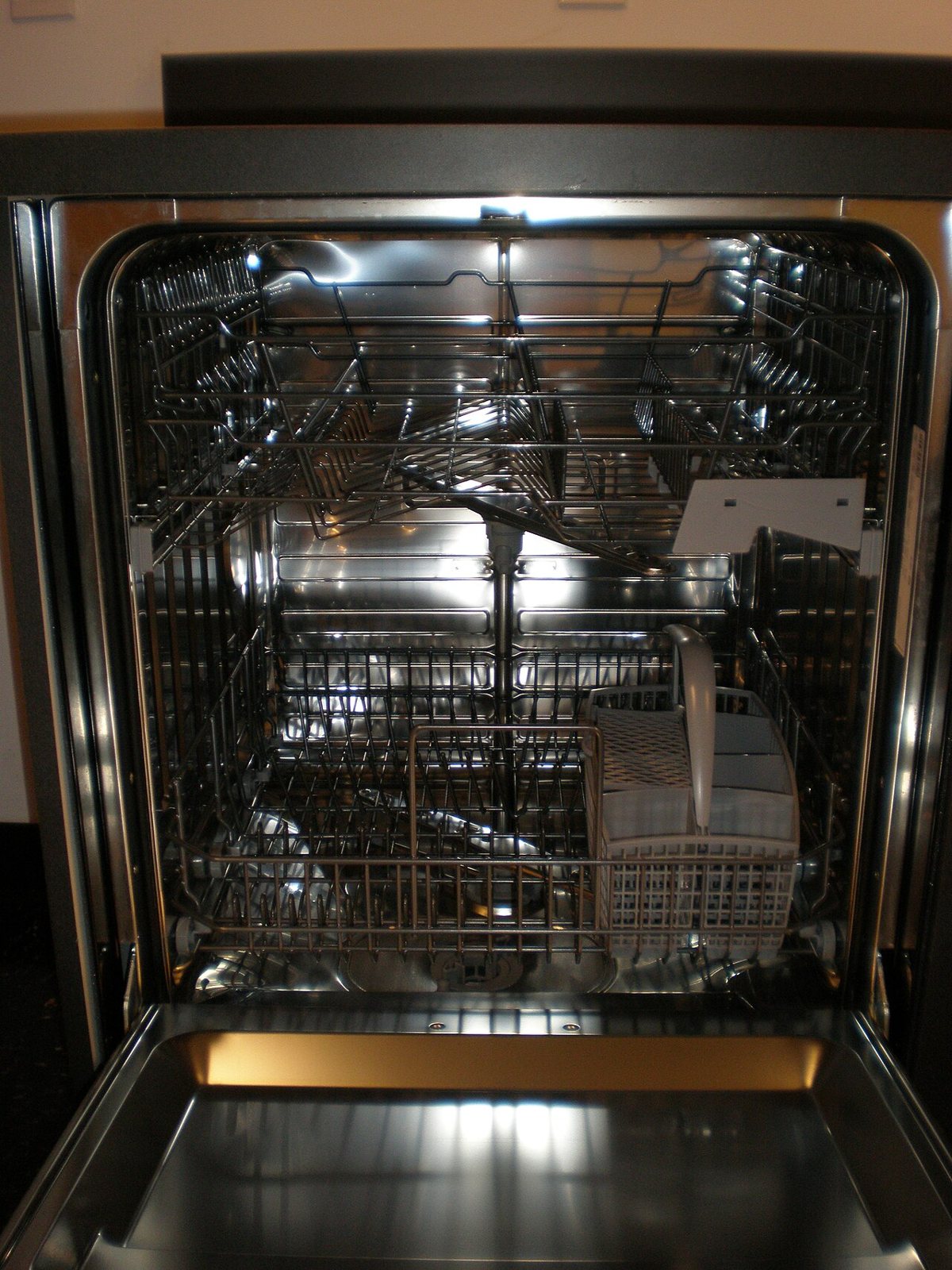
If your dishwasher has started leaving a sandy film on glasses, or the kitchen smells faintly of old soup whenever you open the door, the machine is usually fine. The filter isn't. In most modern dishwashers it sits in the floor of the tub under the bottom rack, and it quietly collects everything that comes off your plates until someone takes it out and rinses it.
Plenty of people have never done that, and if you are one of them, be warned that the first look can be a little grim.
The good news is that this is one of the easiest maintenance jobs in the kitchen. You need a sink, a soft brush and about ten minutes, and with Thanksgiving a couple of weeks away it is worth doing before the machine starts running twice a day.
Why your dishwasher has a filter you have to clean
Older dishwashers often had a hard food disposer, a small grinder that chopped up scraps and sent them down the drain. It worked, but it was noisy. Many newer machines instead use a fine mesh filter that traps food so the water being sprayed back onto your dishes stays clean. The trade-off is that the filter fills up, and on a lot of models nothing empties it except you.
When it clogs, water can't circulate or drain properly. Bits of food get recirculated and land on the "clean" dishes, which is where that gritty film comes from. Trapped food also starts to smell, especially in a machine that sits closed for a day or two between loads.
How to tell it needs cleaning
These are the usual signs, roughly in the order people notice them:
A gritty or speckled film on glasses and the inside of bowls.
A sour or musty smell when you open the door.
Water sitting in the bottom of the tub after a cycle has finished.
Dishes coming out less clean than they used to, even with the same detergent.
Standing water can also mean a kinked drain hose or a blocked air gap, but the filter is the first and easiest thing to check.
How to clean the filter, step by step
Turn the dishwasher off, and if you can reach the plug or the circuit breaker, switch off the power. You will have your hands in the bottom of the tub.
Pull out the bottom rack completely.
Find the filter. On most machines it is a round cylinder in the floor, usually near the back or the middle, sometimes with a flat mesh plate around it. Twist the cylinder (typically a quarter turn counterclockwise) and lift it out, then lift out the flat mesh if there is one. Your manual or the arrows on the filter will show the right direction.
Check the hole underneath before you do anything else. If there is broken glass or a stray olive pit in there, take it out carefully. Use a paper towel or gloves for glass.
Rinse the filter under warm running water. Use a soft brush, like an old toothbrush or a dish brush, with a drop of dish soap to scrub the mesh. Don't use a wire brush or scouring pad, as they can tear the mesh.
Hold the mesh up to the light. If you can see through it evenly, you are done. If greasy patches remain, let it soak in hot soapy water for ten minutes and brush again.
Put the filter back and twist it until it locks. This step matters more than it sounds: a filter that is not seated properly lets debris through to the pump.
Never run the dishwasher with the filter removed.
While you are down there
Two other spots are worth a look. The spray arms have small holes that can clog with seeds, pulp or flakes of limescale. Most arms unclip or unscrew; check your manual, then poke the holes clear with a toothpick and rinse them. Also wipe the rubber door seal and the bottom edge of the door, where drips and crumbs collect and don't get much spray.
If the inside still smells after all that, running an empty cycle on the hottest setting with a dishwasher cleaner product usually helps. People also swear by a cup of white vinegar on the top rack. It can help with mineral film, though some manufacturers advise against frequent vinegar use because of the rubber parts, so I'd check your manual first.
A safety note
Never mix vinegar or any acidic cleaner with chlorine bleach, in the dishwasher or anywhere else. Together they release chlorine gas. If you use a bleach-based cleaner, run a full rinse cycle before using anything else, and keep the kitchen ventilated. And handle the filter area carefully if you have ever broken a glass in the machine.
How often to do it
Manufacturers' advice varies, but for a household running the dishwasher most days, cleaning the filter about once a month is a sensible rhythm. If you scrape plates well before loading, you can stretch it out. Larger families or anyone who loads plates with a lot of food on them will want to go more often.
Pre-rinsing dishes isn't necessary, by the way (scraping is enough, and detergent makers say their enzyme formulas work better with some food left to act on). What helps the filter is keeping big scraps out, things like bones, rice and fruit pits. Do it once now, set a reminder for the first of each month, and you will probably find the machine works better than it has in a while.
See more of us on GoogleAdd Hacks Detective as a preferred source and our stories can show up more often for you in Top Stories.