The first cold week of November is when you find out which radiators survived the summer. You turn the heating on, put a hand on the one in the hall, and the bottom is hot while the top third is barely warm. If it's gurgling at you as well, you can be fairly sure what's wrong.
There's air in it. Letting that air out is called bleeding the radiator, and it's one of the few heating jobs most people can do themselves. You need a small key that costs very little, an old towel, and about five minutes for each radiator (a bit more if you have to wait for them to cool down, which you do).
This guide is for hot water radiators, the kind fed by a boiler through a closed loop. Steam systems are a different animal, and I'll come back to those.
Why air makes a radiator cold
A radiator works by filling with hot water, so any part of it that isn't full doesn't get warm. Air gets into heating systems over time and, being lighter than water, it collects at the highest point it can reach. In a radiator, that's the top. The bubble sits there like the air at the top of a half-full bottle, and hot water can't get into the space it occupies.
So you get a cold band across the top, plus a boiler that keeps working to heat a room that never quite warms up. Open a small valve at the top, let the air out, and the water rises to fill the gap. Nothing about it is clever, which is why I like this job.
Signs that air is the problem:
The top of the radiator is cold while the bottom is warm
You can hear gurgling or rattling from the radiator or the pipes
Every radiator in the house has the same cold band, which usually means all of them need bleeding
What you need
Get a radiator bleed key from any hardware store. Some valves on newer radiators take a flat screwdriver instead, so look at yours before you buy one. You also want an old towel, a rag or a small cup to catch drips, and clothes you don't care about. The water that comes out has been sitting in iron and steel for months and it can be black, so keep it away from pale carpets.
Safety note: water in a heating system can be hot enough to scald. Turn the heating off and let the radiators cool first. That's not just about burns: heating engineers also warn that bleeding with the pump running can pull more air into the system. HomeServe suggests radiators are usually cool to the touch about an hour after you shut off the heat.
How to bleed it, step by step
Run the heating first so you can find out which radiators have cold tops. Make a note of them.
Turn the heating off and let everything cool.
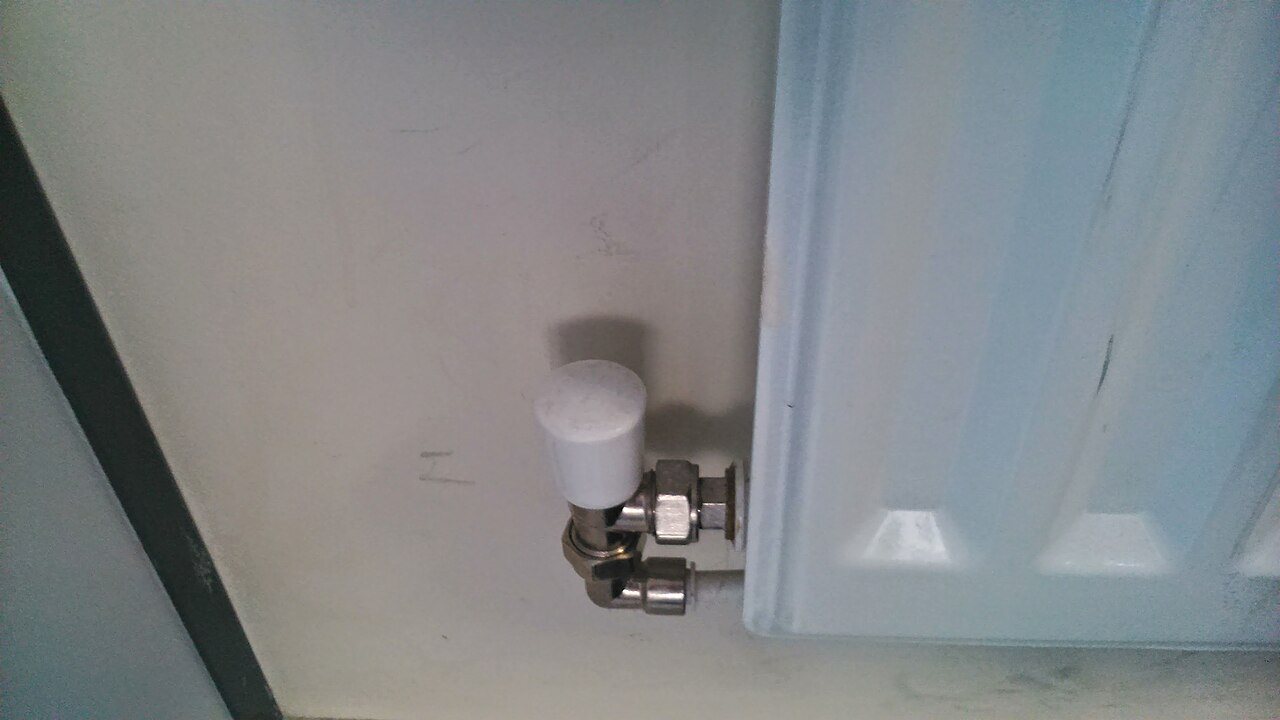
Lay the towel under the bleed valve. It's a small square pin in a round fitting, usually at one of the top corners.
Hold a rag or cup under the valve, fit the key and turn it counterclockwise about a quarter to half a turn. Don't go further than that, or you can end up with a rush of water.
You'll hear hissing. That's the air leaving, and it's a satisfying noise.
When the hiss stops and water starts to dribble out, turn the key clockwise to close it. Hand tight is enough. If you overtighten it you can damage the valve.
Wipe up, and do the next radiator on your list.
Check the boiler pressure (more on that below), then turn the heating back on and feel the radiator tops once it's warm.
On the order, advice differs. Heatable, a British boiler firm, says to start at the lowest radiator and work upward. HomeServe says to start at the top floor and work down. I lean toward the first, though I doubt it matters much as long as you do them all. If you still have cold spots afterward, go around again.
Don't skip the pressure check
This is the step people forget. Letting out air lowers the pressure in a sealed system, and if it drops too far, the boiler may not run properly or may shut down.
Most sealed boilers have a gauge on the front. The usual target is around 1 to 1.5 bar when cold (older American gauges tend to read in psi, often around 12 to 15), and many gauges have a green zone to show the safe range. If it's below 1, you top it up using the filling loop, a flexible hose with valves underneath or beside the boiler. Open it slowly, watch the needle, and close it as soon as you reach the right range. Your boiler's manual will show exactly how yours works, and it's worth reading that first, because models vary.
If the needle goes too high, a radiator bleed will bring it down again.
When bleeding won't fix it
Bleeding only cures trapped air. If a radiator is cold at the bottom or in patches, the likely culprit is sludge, a mix of rust and dirt that settles inside and blocks the flow. If a radiator is cold all over, the fault could be a stuck valve or air in the pipes. Bleeding that one won't do much. If you have to bleed the same radiator every few weeks, something is letting air in, which might mean a small leak or a fault in the system itself.
That's the point to call a heating engineer. Flushing a system is a job for someone who has the right equipment, and a licensed pro should look at anything to do with the boiler beyond topping up the pressure.
If you have steam radiators
Older American buildings often have steam heat. Those radiators have a small vent on the side, and you don't bleed them with a key. The vent lets air out by itself, and the valve is meant to be fully open or fully closed. If one isn't heating, the vent may be stuck or the radiator may need leveling. Leave that to someone who knows steam, because the pressures and temperatures are not what you want to experiment with.
For everyone else, the best time for this job is right now, before the coldest weeks. Keep the key somewhere you'll be able to find it next October. Tape it to the side of the boiler. It's the only filing system I trust.