Photo: Frank C. Müller, CC BY-SA 4.0, via Wikimedia Commons
The first sign is usually the towels. One week they come out dry after a normal cycle, and a month later they're still damp in the middle and you're hitting start again. Most people blame the dryer. Most of the time the dryer is fine, and the hot air simply has nowhere to go because the vent is choked with lint.
That's an energy problem, and it's also a safety one. The U.S. Fire Administration has estimated that home clothes dryers start roughly 2,900 fires a year, and that failure to clean them is the leading factor. With winter coming and more laundry going in the dryer instead of on the line, now is a good time to give the whole system a proper clean. It takes about an hour, and most of the tools you probably own already.
Why the lint screen isn't enough
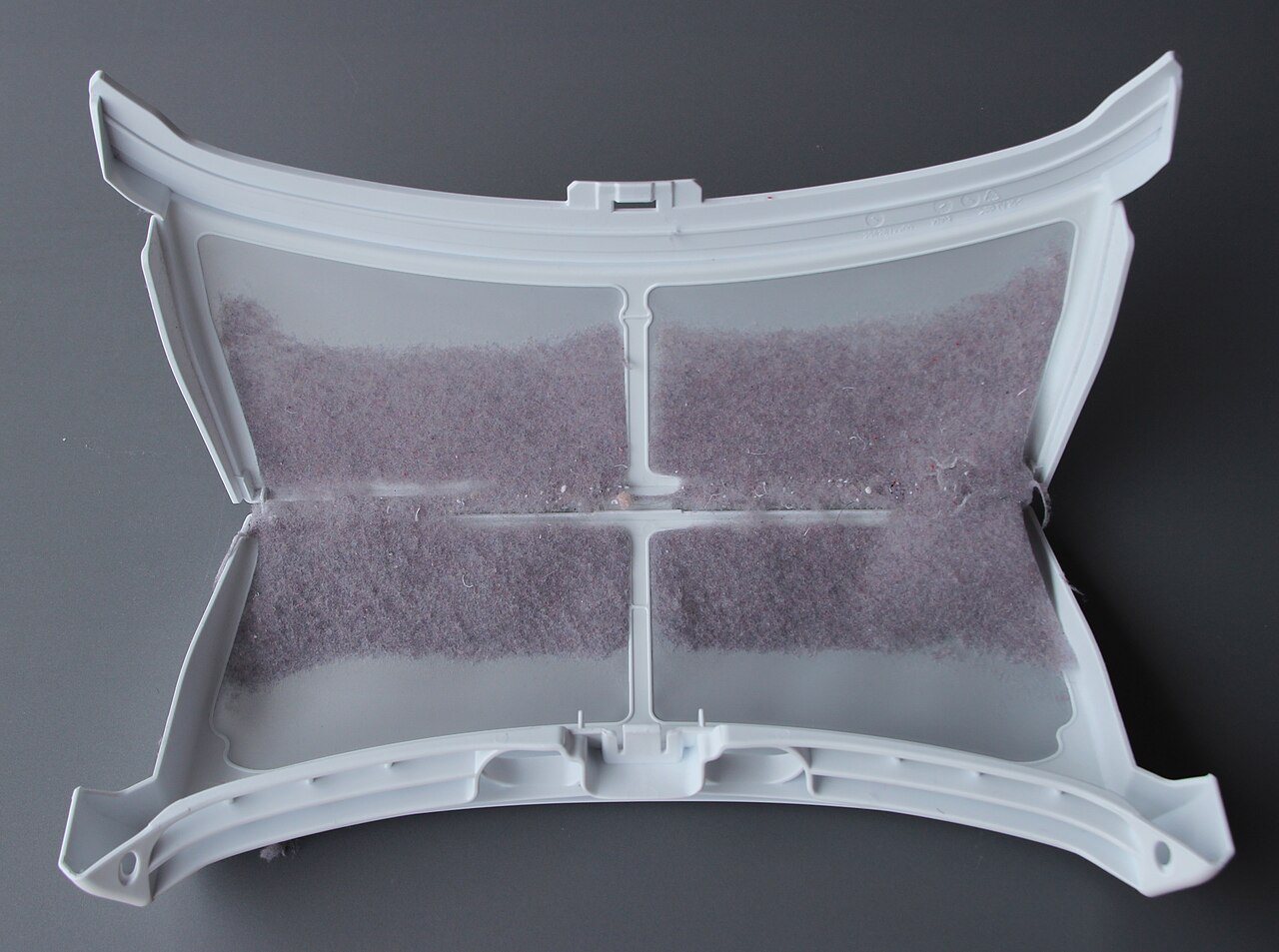
The screen catches a lot, but not everything. Fine fibers slip past it and settle in the trap housing below, in the duct behind the machine and in the vent hood outside. Over months that builds into a felt-like layer that narrows the airflow. The dryer then runs longer and hotter to do the same job, and lint is very flammable.
Cleaning the screen after every load is the habit that matters most. Everything else in this guide is the deeper clean you do once or twice a year, depending on how much laundry your household runs.
Wash the screen, don't just peel it
Peeling off the visible lint is good. Washing the screen now and then is better, especially if you use dryer sheets or liquid fabric softener. Both can leave a waxy film on the mesh that you can't see, and it blocks air even when the screen looks clean.
Here's the quick test: run tap water over the screen. If the water pools on top instead of running through, there's a film. Scrub both sides with warm water, a little dish soap and a soft brush (an old toothbrush works), rinse, and let it dry completely before you slide it back in.
Clear the trap housing
With the screen out, look down into the slot it sits in. You'll usually see a gray fringe of lint clinging to the sides. Unplug the dryer first. Then use a vacuum with a narrow crevice attachment, or a long, flexible lint brush made for the job, to pull out what you can reach. Go gently, because there are sensors and thin metal edges in there, and you're trying to remove lint, not scrape the machine.
Clean the duct and outside vent
This is the part that makes the biggest difference. Unplug the dryer, or for a gas dryer turn it off and be very careful not to bump or strain the gas line. If you're not comfortable moving a gas dryer, this is where I'd call a professional.
Pull the dryer away from the wall and loosen the clamp holding the duct to the back of the machine. Vacuum out both ends. Then use a dryer vent cleaning kit, which is a round brush on flexible rods that you push through the duct. Many kits attach to a cordless drill. If you use one, keep the drill turning clockwise so the rod sections don't unscrew themselves halfway down the duct (an easy mistake, and an annoying one to fix).
Then go outside and find the vent hood. With the dryer running, the flap should open and you should feel a strong flow of warm air. If the flap is stuck, or the airflow is weak, clean out the hood and check for lint plugs or nests. Birds like these openings.
Check what the duct is made of
While the dryer is pulled out, look at the duct itself. Thin plastic or foil accordion ducts sag, crush easily and trap lint in their ridges, and fire safety groups advise against them. A rigid or semi-rigid metal duct, kept as short and straight as the space allows, is the safer choice. Reconnect it firmly with clamps rather than screws, because screws poking into the duct catch lint.
When the trick doesn't fix it
If drying times stay long after a full clean, the problem may be the machine: a faulty heating element, thermostat or moisture sensor. That needs a repair technician. Also stop using the dryer and get it checked if you notice a burning smell, or if the top of the machine is unusually hot to the touch.
If you have a condenser or heat-pump dryer with no outside vent, the cleaning points are different. Those machines have a lint filter and often a second filter or a condenser unit that needs rinsing, so check your manual for where they are.
A few safety habits worth keeping
Clean the lint screen before or after every load, without exception. Don't run the dryer when you're leaving the house or going to bed. And never put items with oil, gasoline or solvent stains in the dryer, even after washing, since leftover residue can ignite from the heat. Those go on a line to air dry.
Put a reminder in your calendar to do the duct once a year. Autumn is a sensible time for it, right before most of the laundry moves from the line to the machine, and I'd bet your towels dry on the first try afterward.