Photo: Samsule2, CC BY-SA 4.0, via Wikimedia Commons
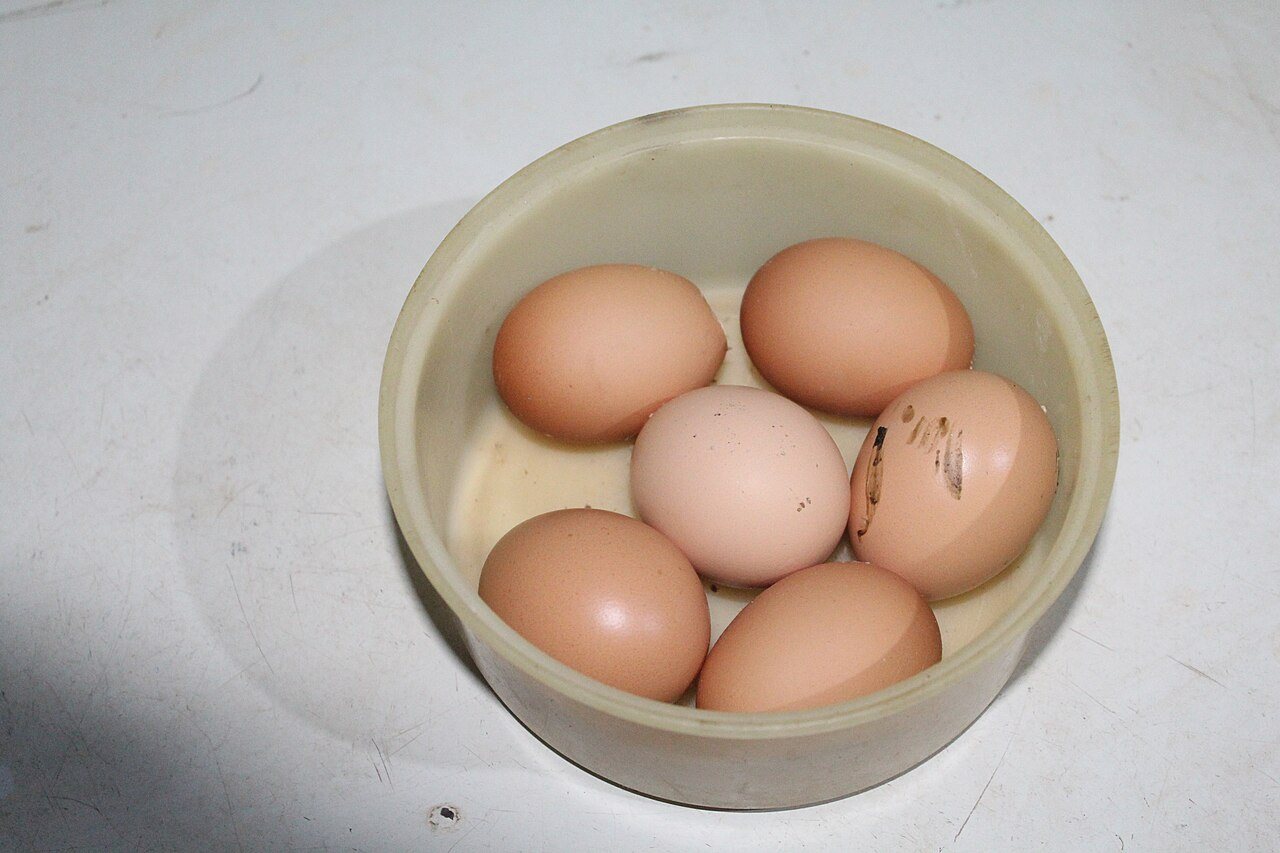
Every year around holiday baking season, someone finds a carton at the back of the fridge and can't remember when they bought it. The usual answer is the float test: fill a bowl with cold water, lower the egg in, and watch what it does.
The test works, up to a point. It is a reasonable way to estimate how old an egg is. It is not a way to tell whether an egg is safe to eat, and those two things get mixed up a lot.
How to do the float test
Fill a bowl or tall glass with enough cold water to cover an egg by a couple of inches. Gently lower the egg in with a spoon so it doesn't crack on the bottom. Then look at how it settles.
If it sinks and lies flat on its side, the egg is fresh. If it sinks but tilts up, or stands on its narrow end, it's older but generally fine to use. If it floats to the top, it's quite old, and most guidance says to throw floating eggs away.
Do one egg at a time if you're testing a whole carton, and dry them before they go back in the fridge.
Why old eggs float
The trick comes down to a small pocket of air at the wide end of every egg, called the air cell. When an egg is freshly laid, that pocket is tiny.
An eggshell looks solid, but it is covered in thousands of tiny pores. Over time, moisture and gases slowly escape through them, and air takes their place. The air cell grows, the egg gets lighter for its size, and eventually that wide end starts to lift. Stand an old egg in water and you are basically watching its air cell act like a little float.
That is all the test measures. A bigger air cell means more time has passed (or the egg was stored somewhere warm, which speeds the process up).
What the float test can't tell you
Here is the part the hack videos tend to skip. Bacteria such as Salmonella don't change whether an egg floats. A fresh egg that sinks perfectly flat can still carry it, and an older egg that tilts can be completely fine.
So treat a sinking egg as "probably not too old," not "definitely safe." The usual food safety basics still apply: keep eggs refrigerated if that's how they were sold, don't use eggs with cracked or slimy shells, and cook eggs properly when a recipe calls for it.
The check that matters more: crack and sniff
For eggs you're unsure about, crack each one into a small separate bowl before adding it to anything. A bad egg is hard to miss. It smells sulfurous and unpleasant the moment it's open, and you'll know.
Using a separate bowl means one questionable egg doesn't ruin a whole bowl of cake batter. It's an extra dish to wash, which is annoying, but I'd rather wash a cup than throw out a double batch of cookie dough.
Read the carton date properly
In the United States, cartons of USDA-graded eggs carry a pack date printed as a three-digit number from 001 to 365. That's the day of the year the eggs were packed: 001 is January 1, and 365 is December 31. It's a more useful number than a vague "best by" if you want to know how long the eggs have actually been around.
The USDA's general guidance is that raw eggs in the shell keep in the refrigerator for roughly three to five weeks. Storing them in the original carton on a shelf, rather than in the door, helps keep the temperature steadier.
If you've ever wondered why supermarkets in the UK and much of Europe keep eggs on an ordinary shelf, it comes down to washing. Eggs sold in the US are washed before they reach stores, which removes a natural protective coating on the shell, so they have to stay refrigerated. Many European countries don't wash eggs, and the rules there are built around that. Whatever the system, follow the way your eggs were sold: if they came from a refrigerated case, keep them in the fridge.
One small upside of slightly older eggs: they tend to be easier to peel once hard-boiled. So if the float test says a few of yours are tilting, that's a decent batch for deviled eggs.
When to use the float test, and when to skip it
The float test is handy when a carton has lost track of time, when you've moved eggs into a holder and thrown away the box, or when you're simply curious. It costs nothing and takes a minute.
Just don't let it replace the crack-and-sniff check. If an egg floats, toss it. If it sinks, crack it into a cup anyway, take a quick look and a sniff, and then get on with your baking.
See more of us on GoogleAdd Hacks Detective as a preferred source and our stories can show up more often for you in Top Stories.