Photo: Mark Miller, CC BY-SA 4.0, via Wikimedia Commons
For years the serious Thanksgiving advice involved a five-gallon bucket, a bag of salt and a fight with the refrigerator shelves. You lowered a raw bird into a tub of cold salt water and hoped no one needed the milk.
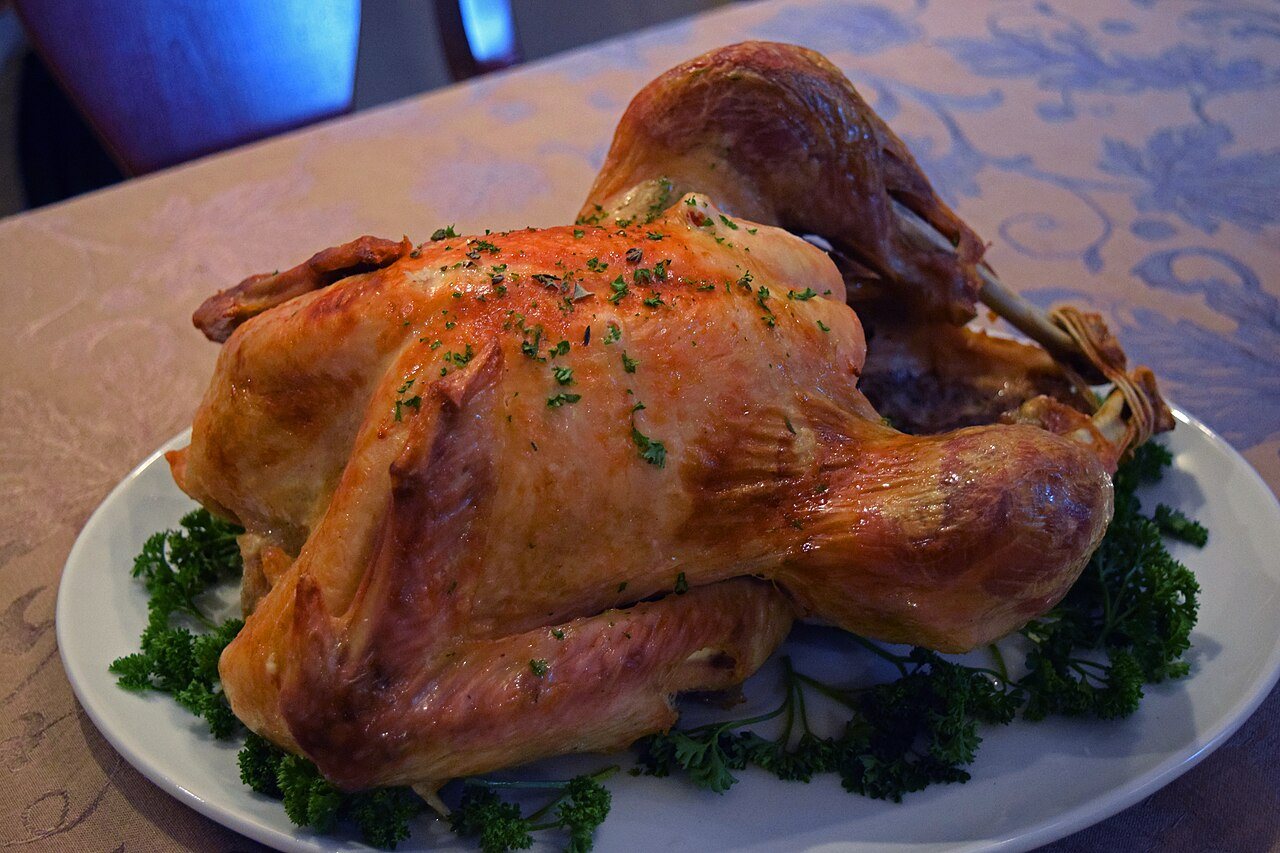
Then, back in the 2000s, the Los Angeles Times food editor Russ Parsons started telling readers to throw out the bucket. His method was to rub the turkey with salt, put it in a bag, and leave it alone for three days. It's less work, it takes up less room, and in my opinion it makes a better bird.
Thanksgiving this year is Thursday, November 26, so you have time to plan this properly.
Where the idea came from
Parsons didn't invent it from nothing. He took the technique from Judy Rodgers of Zuni Cafe in San Francisco, who salted chickens ahead of roasting them, and he scaled it up to a turkey. Fans sometimes call the result the Judy Bird, which is a nice bit of credit in a field that doesn't hand out much of it.
Why salt alone works
Salt on raw meat pulls moisture to the surface at first. Leave it long enough and that liquid, now full of dissolved salt, goes back in. That's the whole trick, and it's why the three days matter: the salt travels with the moisture and seasons the meat well below the skin.
The wet method gets salt in too, by soaking the meat in water. Parsons's complaint was that wet-brined meat can turn "a little mushy" and spongy. A dry-brined bird stays firm and tastes like turkey, because you haven't added any extra water to dilute it. He also says the rub pulls proteins to the surface, which helps the skin brown. You'll see that once it's in the oven.
The method, step by step
Thaw the bird first if it's frozen. The USDA's figure is about 24 hours in the fridge for every 4 to 5 pounds, so a 15-pound turkey needs three to four days. See the timing note below before you plan around that.
Pat it dry and weigh it, or read the weight off the label.
Measure 1 tablespoon of kosher salt per 5 pounds. Herbs and spices are optional; grind them in with the salt if you want them.
Rub the salt over the breast and thighs and inside the cavity.
Put the turkey in a 2½-gallon sealable bag, press out the air, seal it and refrigerate it breast side up.
For the next three days, massage the salt around once a day through the bag. On the last day, turn the bird onto its breast.
The day before roasting, take it out of the bag. No salt should be visible. Put it on a large plate in the fridge, uncovered, for at least 8 hours so the skin dries out.
Let it sit at room temperature for an hour before roasting, and don't rinse it.
Parsons's recipe then starts breast side down at 425°F for 30 minutes, then flips the bird and drops the oven to 325°F for about 2¾ hours. Dry-brined turkeys can cook faster, so start checking early. Rest it, tented with foil, for 30 minutes before carving.
Timing it for Thanksgiving
Parsons's full schedule means salting on Sunday, November 22, and taking the bird out of the bag on Wednesday morning. There's a catch he doesn't dwell on. The USDA says a thawed turkey can stay in the fridge for 1 to 2 days before cooking, and salt doesn't change that clock.
So you have two ways to stay inside that window. One is to salt a bird that's still partly frozen in the middle, so it finishes thawing in the bag. The other is the two-day version: salt the thawed bird on Tuesday morning, take it out of the bag on Wednesday morning and let it dry until you roast on Thursday. I'd take the second if you've got a fresh turkey. You give up a little depth of seasoning and you stay within the guidance.
When this trick won't work
Read the label before you buy the salt. A lot of supermarket turkeys are "self-basting" or "enhanced," meaning they've already been injected with a salt solution, and kosher turkeys are salted as part of processing. Salt either of those and you'll get something closer to ham. For those birds, skip this entirely.
The salt type matters as well. Kosher salt brands differ in crystal size, and a tablespoon of table salt weighs a good deal more than a tablespoon of flaky kosher salt. If you only have fine salt, use noticeably less. (If you own a scale, weighing is better, and I'd suggest looking up a by-weight figure for your particular brand of salt.)
A last-minute version is weaker. Salting the night before still does something, but it protects the meat less, so keep a closer eye on the roast. And no brine will save a bird that's overcooked, though gravy helps.
Safety note: raw poultry and the fridge
You'll have a raw turkey sitting in your fridge for days, so take this part seriously.
Keep the fridge at 40°F or below, and put the bird on the bottom shelf in a pan or tray to catch any leaks. The USDA says food shouldn't sit between 40°F and 140°F for long, so don't stretch that hour out of the fridge. The USDA also advises against washing raw turkey, because rinsing can spray bacteria around the sink. (Some published versions of this recipe say to wash it first. I'm with the USDA.) Wash your hands, the board and anything else that touched the bird.
The turkey is done when the thickest part of the breast, the innermost thigh and the wing all reach 165°F on a food thermometer. Trust the thermometer, not the pop-up button or the color of the juices.
What to do with the leftovers
Get them into the fridge within two hours. Turkey and gravy keep for 3 to 4 days or can be frozen, and they should be reheated to 165°F.
The drippings will be saltier than usual, so taste your gravy before you season it.
See more of us on GoogleAdd Hacks Detective as a preferred source and our stories can show up more often for you in Top Stories.