How to Stop Static Hair in Winter, and Why Your Hat Makes It Worse
You pull off a wool hat, and half your hair rises to greet the ceiling. It clings to your scarf, your cheek and the headrest in the car. Nobody has this problem in July, and everybody with hair longer than a buzz cut seems to have it by December.
The fixes are simple and cheap, and most of them are already in your bathroom. They make a lot more sense once you know what's going on, because what you're dealing with is plain electricity that happens to be sitting on your head.
Why winter does this to you
When two materials rub together, electrons move from one to the other. Physicists call it the triboelectric effect, and you met it as a kid if you ever rubbed a balloon on your head. A wool hat sliding off, a plastic comb or a fleece collar will all do the job.
Once your strands pick up the same electrical charge, they repel one another, the way two matching magnet poles do. Each hair tries to get away from its neighbors, and that's the halo.
The season matters because of water. In damp air, a thin film of moisture on your hair and clothes lets charge leak away about as fast as it builds. Cold air holds very little moisture, and warming it indoors drops the relative humidity even further, so the charge has nowhere to go. Dry or damaged hair tends to suffer most, partly because its rougher surface creates more friction.
So every fix below does one of three things: it cuts friction, it adds a little moisture, or it gives the charge a way out. (There's a fourth option, which is a bun, but I'd file that under surrender.)
Conditioner is doing more than you think
This is the fix that works best, and it works for a reason you can trace to chemistry. Most conditioners contain positively charged ingredients that cling to the surface of hair, especially damaged areas, leaving a slippery coating that smooths the strand. Fabric softener works in a very similar way, which is why your towels stop crackling.
If you already use conditioner, give it a proper couple of minutes in winter and concentrate on the lengths and ends. A small amount of leave-in conditioner on towel-dried hair takes the idea further. People with fine hair should go easy, since too much will trade static for limp.
Swap the tools that create the charge
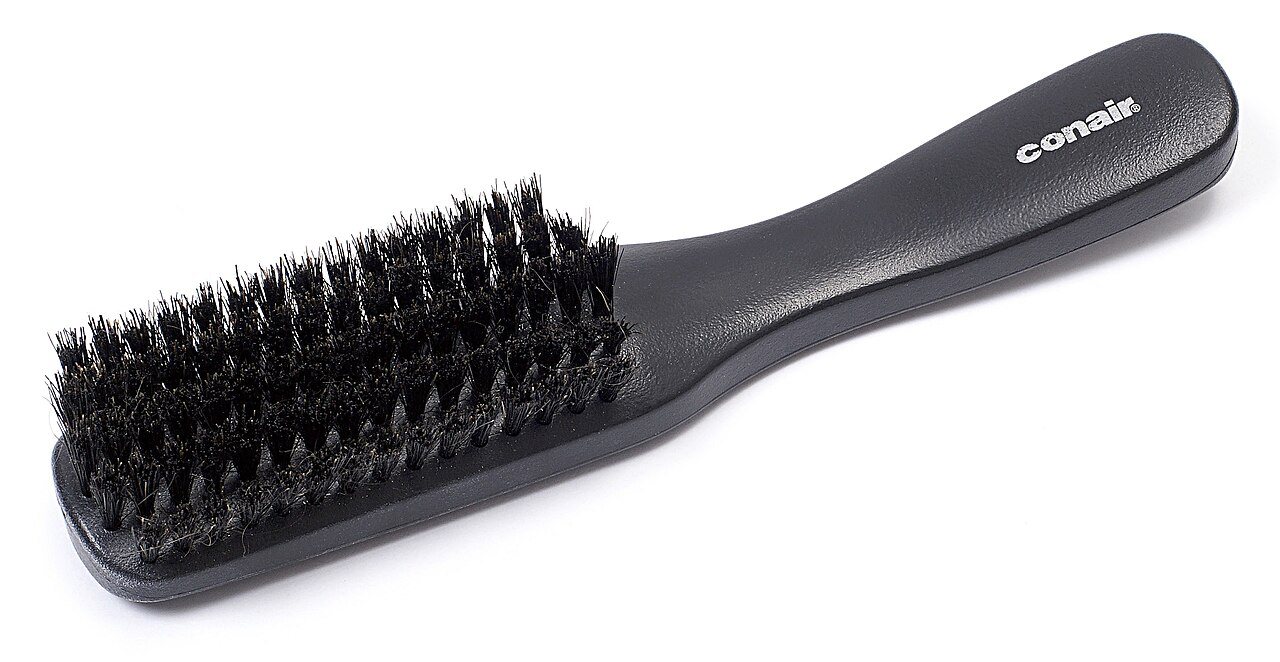
Plastic combs and brushes are among the worst offenders. A metal comb conducts electricity, so the charge has a way off your hair instead of piling up. Stylists often recommend wood or bamboo too, and wood at least doesn't generate static the way plastic does.
Brushing itself is friction, so slow down. Rough terrycloth does much the same thing, and blotting with a microfiber towel or an old T-shirt is gentler than rubbing. Some people swear by silk or satin pillowcases for the same reason. That one makes sense in theory, although I'd treat it as a nice extra and not a cure.
Hats are harder to avoid, for obvious reasons. Wool and many synthetics are prime static makers. A hat with a smooth lining helps, and so does lifting the hat straight off instead of dragging it back across your head.
Quick fixes when you're already out the door
For a quick repair, dampen your hands and smooth them over the flyaways. Water lets the charge dissipate, and it costs nothing. It's also the fix most likely to be available in an office bathroom.
A dab of hand lotion rubbed thoroughly between your palms does a similar job and adds a bit of slip. Use very little, and keep it away from your roots unless you want your hair to look three days unwashed.
The famous one is the dryer sheet. Run it lightly over your hair, or the inside of your hat, and the static usually goes. It works because the sheet leaves behind the same kind of softening ingredients as conditioner. It was made for laundry, though, so I'd keep this for emergencies, and skip it if strong fragrance bothers you. A light mist of hairspray on your brush can also hold things down for an evening.
Fix the air if you can
If your whole home crackles, your doorknobs included, the air may be the real issue. A humidifier in the bedroom adds moisture while you sleep, and it can help your hair, your clothes and those little shocks all at once. Clean it the way the manufacturer says, since a neglected tank can grow things you don't want to breathe in.
When these tricks won't do much
Very fine or freshly washed hair will always be more prone to flyaways, and no trick removes static completely on a dry, freezing day. Ionic hair dryers are often sold as the answer, and many people like them, but as far as I can tell the evidence behind the claims is thin, and I wouldn't buy one for this alone.
One safety note: if you use a hair dryer or flat iron to tame static, keep the heat moderate and let hair dry a little first, because high heat on damp strands can damage them and leave you with more of the dry, rough hair that caused the trouble. Treat that as a rule for any hot tool.
Start with conditioner and a different comb. Those two changes cost almost nothing and they solve most of it.