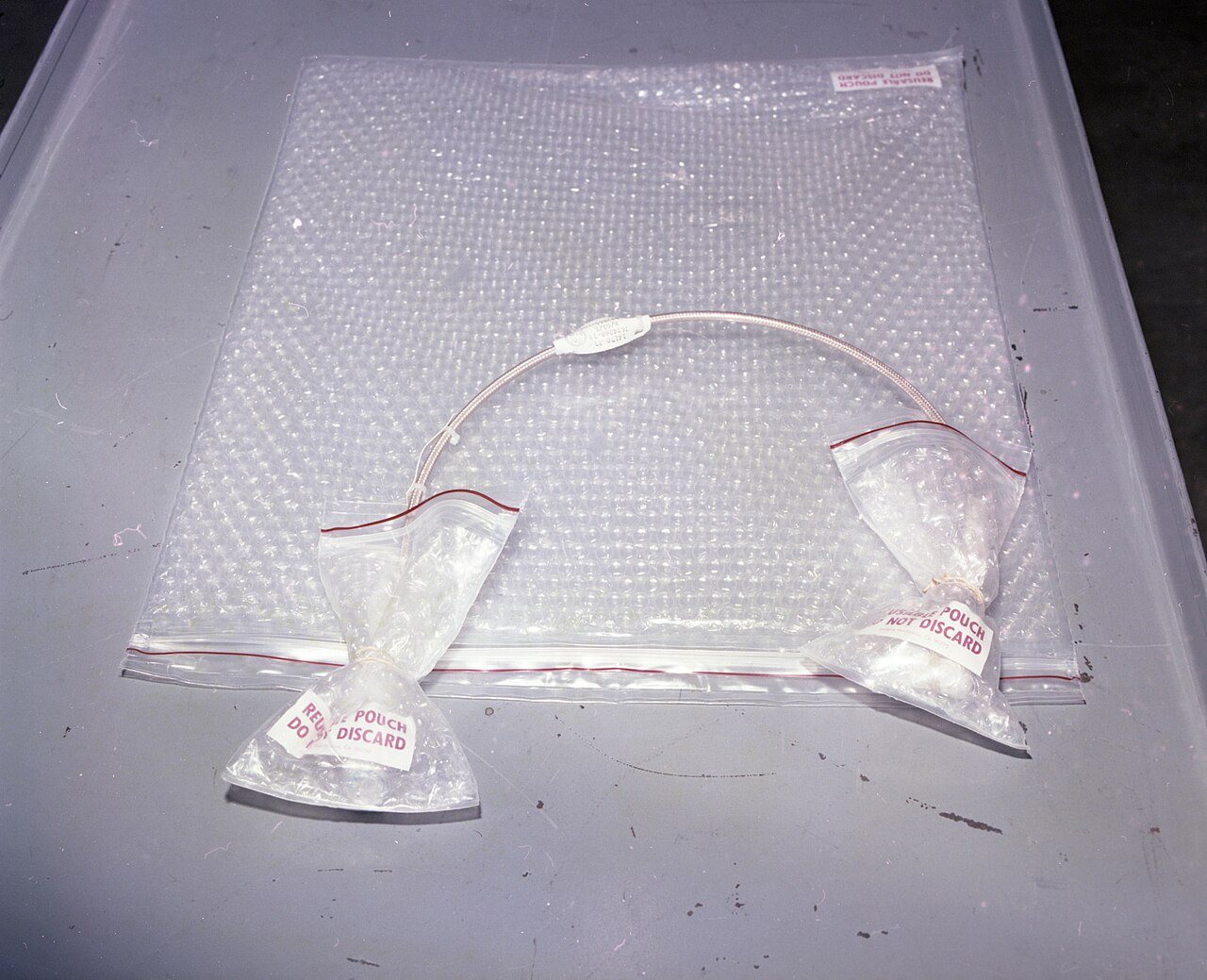
Photo: Convair collection, San Diego Air and Space Museum Archives, public domain, via Wikimedia Commons
In 1957 two engineers in Hawthorne, New Jersey, Alfred Fielding and Marc Chavannes, sealed two plastic shower curtains together in a way that trapped little pockets of air between them. They were not trying to protect anything. They were trying to make wallpaper.
The idea was a textured, modern wall covering, and nobody wanted it. They then tried selling it as greenhouse insulation, which did not take off either. It took a few more years, and one very large customer, for anyone to notice that the material was much better at stopping things from breaking.
With the holiday shipping season about to fill everyone's recycling bin with the stuff, I went digging into how a failed home decor product ended up wrapped around half the parcels in the world, and what it is good for once the box is open.
From a garage experiment to Sealed Air
Fielding and Chavannes founded the Sealed Air Corporation in 1960 to make a business out of their bubbles. The company still owns the Bubble Wrap trademark, which is why you will see packaging suppliers selling "bubble cushioning" or "air bubble film" instead. (Trademark lawyers care about this a lot more than the rest of us do.)
The basic product has barely changed. Two layers of plastic film are bonded together so that one layer forms rows of sealed air pockets. Air is a decent cushion and weighs almost nothing, which matters when shipping costs depend on weight.
The computer that gave it a job
The turning point came from IBM. When it introduced its 1401 computer at the turn of the 1960s, it needed a way to ship delicate machines to customers without damage, and it used Sealed Air's bubbles to protect them in transit. That gave the product a big, credible customer and a clear purpose, and nobody mentioned wallpaper again.
From there it spread through electronics, aerospace and eventually ordinary mail order. The photograph at the top of this story comes from the archives of Convair, the aircraft and rocket maker, and shows a wiring part sealed in bubble pouches marked "Reusable pouch, do not discard," which is a nice bit of advice we will come back to.
Why it protects things, and when it does not
The air pockets work as tiny shock absorbers. When a box gets dropped, the bubbles compress and spread the force over a longer moment and a larger area, so less of the jolt reaches the object inside. Small bubbles suit light, smaller items; bigger bubbles cushion heavier things.
It is not magic, though. Bubble wrap does little for an item that can slide around inside a half-empty box, because the object picks up speed before anything slows it down. Fill the gaps too. And bubbles that have been popped, or squashed flat by heavy objects stacked on top for a long time, have lost most of their cushioning.
The usual advice, including from packing suppliers, is to wrap with the bubbles facing the item so they take the impact directly, with the flat side outward where tape sticks better. In practice I have seen it done both ways without disaster, but bubbles-in is the safer habit.
Popping it, by the way, has its own fan club. Bubble Wrap Appreciation Day has been marked in the United States on the last Monday of January since the early 2000s, which tells you something about January.
Reusing it around the house
Before you throw it out, a few genuinely useful second jobs:
Window insulation for sheds, greenhouses or spare rooms. Spray a thin film of water on the glass and press the bubble side against it; it sticks without tape and peels off later. It cuts drafts and heat loss noticeably on single glazing, at the cost of your view.
Frost protection for potted plants. Wrapping the pots (not the leaves) of outdoor containers helps keep roots from freezing solid on cold nights.
A drawer and shelf liner. A sheet in the bottom of a glassware cupboard or a toolbox drawer stops things rattling and chipping.
Storage for holiday ornaments. Glass baubles wrapped individually survive the year in the loft far better than ones loose in a box.
A kneeling pad. Fold a few layers into a bag for gardening or tiling on hard floors.
A quick safety note: it is plastic, so keep it well away from radiators, heaters, stoves and anything that gets hot, and keep loose sheets away from babies and small children, as with any plastic film.
Recycling what you cannot reuse
Most bubble wrap is made of low-density polyethylene, the same family of plastic as many grocery bags. Many curbside recycling programs do not accept plastic film because it jams sorting machines, so check your local rules before tossing it in the bin. In a lot of places, supermarkets or large stores run collection points for plastic bags and film, and clean, dry bubble wrap can usually go there with the tape and labels removed.
The better option is still to pass it on. Local buy-nothing groups, small online sellers and anyone who is moving house will often take a clean roll off your hands. Which is exactly what that old Convair label was getting at.
See more of us on GoogleAdd Hacks Detective as a preferred source and our stories can show up more often for you in Top Stories.