Photo: X-Javier, CC BY-SA 4.0, via Wikimedia Commons
You can feel it on a windy evening: a thin, cold line of air across your ankles near the front door, or a chill by the window that the radiator never quite beats. That is warm air you paid to heat slipping outside, and cold air sliding in to replace it.
The good news is that drafts around doors and windows are some of the cheapest problems in a house to fix. You don't need a contractor or an energy audit to find the worst ones. You need a calm day, something smoky and about half an hour. The seals themselves are mostly sold for a few dollars each at any hardware store, which is why this is one of my favourite winter jobs (it is also very satisfying, in a slightly nerdy way).
Why small gaps cost more than they look
A gap a few millimetres wide doesn't sound like much. But run it along the bottom of a door, up both sides and across the top, and you have a crack several metres long. On a cold, windy day, air pushes through every bit of it.
Heated air also tends to rise and escape near the top of the house, which pulls cold air in lower down. That is why drafts are often worst at floor level, around exterior doors and low windows. Sealing them won't replace insulation, but it does stop your heating from working against an open crack all winter.
The incense test for finding leaks
Pick a day with some wind outside, and close every exterior door and window. Turn off fans and, if you can, the heating system's blower for a few minutes so it does not stir the air.
Light a stick of incense and hold it a few centimetres from the edges of a door: along the bottom, up the hinge side, around the latch, across the top. Do the same around window frames, the sashes where they meet, and the trim where the frame meets the wall. Watch the smoke. If it streams sideways or gets sucked toward the gap, you have found a leak. Mark each one with a small piece of painter's tape so you remember where they are.
Safety note: keep the incense well away from curtains, blinds and anything papery, and put it out in water or sand when you finish. If you would rather not use a flame at all, a damp hand works surprisingly well. Wet the back of your hand and run it slowly along the edges, and you will feel the cold air on your skin.
The paper test for door and window seals
For doors and casement windows that close against a seal, there is an even simpler check. Close the door on a sheet of printer paper so it is trapped between the door and the frame, then pull it out. If it slides free with no resistance, that part of the seal is not doing its job. Move the paper around the whole door and test several spots.
This is also a good way to check whether the problem is the seal or the door itself. If the paper is loose only near the latch, try adjusting the strike plate so the door pulls in tighter before you buy anything.
Cheap fixes for the gaps you find
Match the fix to where the leak is.
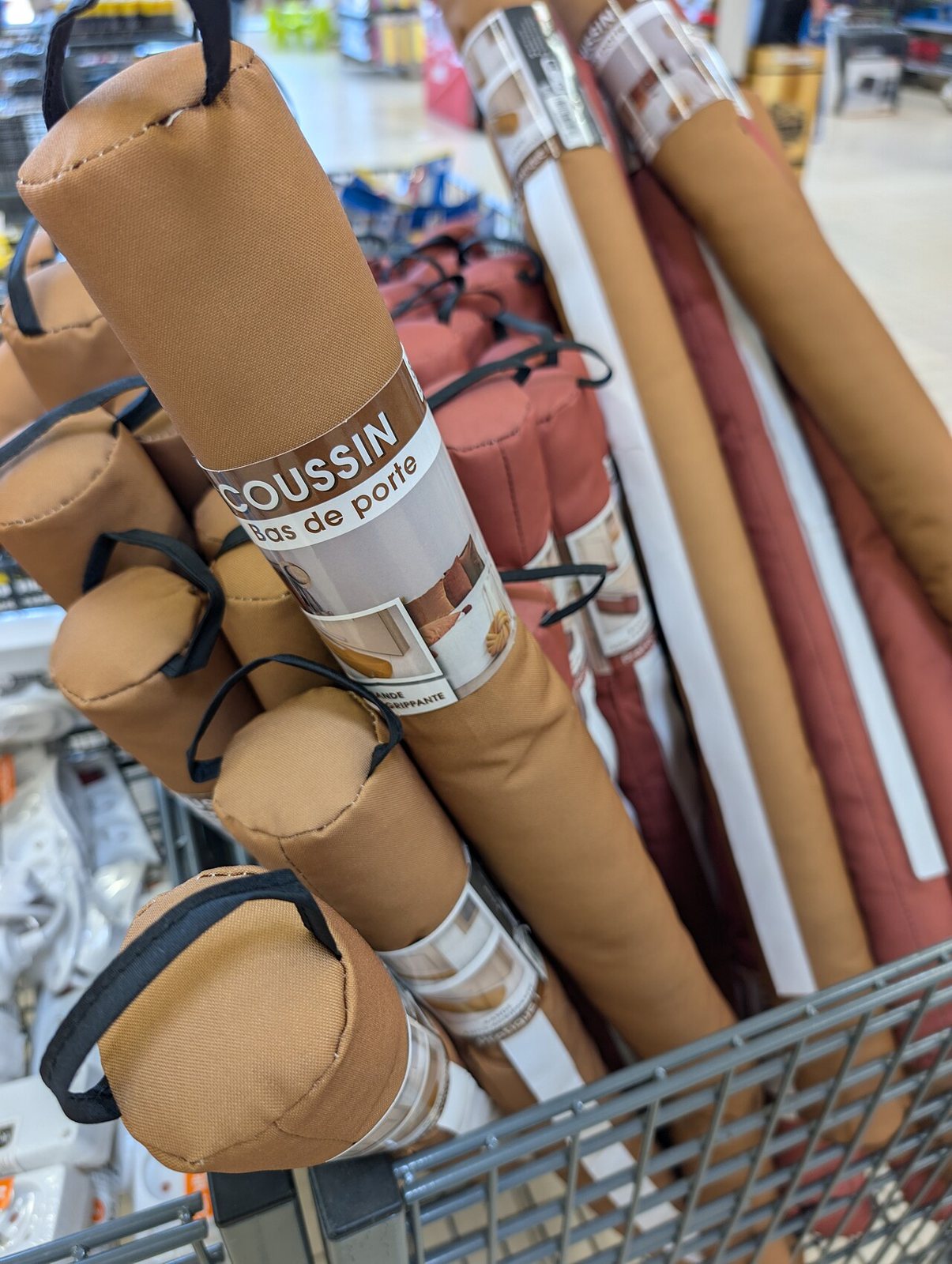
For the gap under a door, a door sweep is the long term answer. It screws onto the inside bottom of the door and has a rubber or brush edge that touches the threshold. A fabric draft stopper (the long fabric tube in the photo at the top) is the no-tools version. It works fine, but you will be nudging it back into place with your foot all winter.
For the sides and top of a door, self adhesive foam tape or V-strip weatherstripping fits into the frame where the door closes. Foam is easier; V-strip lasts longer and handles gaps that change through the seasons. Clean the surface well before sticking anything down, or the adhesive will let go by January.
For window sashes that rattle or leak where they meet, removable rope caulk is cheap and comes off cleanly in spring. Window insulation film kits, which you tape over the inside of the frame and tighten with a hairdryer, are another option for windows you don't open in winter. They look a bit odd up close but do a decent job. Follow the kit's instructions on the hairdryer and keep it moving so you do not overheat the film or the frame.
For fixed gaps where the trim meets the wall, a bead of caulk is the right tool. Use a paintable acrylic caulk indoors, keep the room ventilated while it cures and read the label on whatever you buy.
When not to seal a gap
Not every opening in a house is a mistake. Gas furnaces, boilers, water heaters and fireplaces need air to burn safely, and some homes have deliberate vents for that. Don't block combustion air vents, and don't tape over bathroom or kitchen exhaust vents either. If you have any fuel-burning appliances, make sure you have working carbon monoxide alarms, and ask a professional if you are unsure whether an opening is supposed to be there.
Also watch for condensation after you seal up. A tighter house holds more moisture, so run bathroom and kitchen fans while you shower and cook.
A one-afternoon plan
If you only do one thing this weekend, test and fix the exterior door that gets the most use. That is usually where the biggest, coldest leak is. Next, check the windows in the room you spend the most evenings in. Then work outward from there as the budget allows.
Keep a small bag with leftover foam tape, a door sweep screw or two and the painter's tape in a kitchen drawer. Weatherstripping wears out, and checking every autumn with the same incense test takes ten minutes once you know where to look.
See more of us on GoogleAdd Hacks Detective as a preferred source and our stories can show up more often for you in Top Stories.